Working in the oilfield and oil and gas industry means facing conditions that most people will never experience. From drilling rigs and pipelines to refineries, petrochemical plants, compressor stations, terminals, fabrication shops, and maintenance turnarounds, industrial professionals routinely work around heat, pressure, combustible materials, energized equipment, welding operations, and other serious hazards.
In these environments, what a worker wears is more than a matter of appearance or comfort. The right personal protective equipment can play a critical role when something unexpected happens. For many oilfield, refinery, pipeline, and industrial professionals, flame-resistant clothing is an essential part of that protection.
Flame-resistant clothing, commonly called FR clothing, is specially designed to resist ignition and stop burning after the source of ignition is removed. Unlike ordinary clothing that may continue to burn and contribute to serious injury, properly selected FR apparel is engineered to reduce the severity of thermal exposure and provide an important layer of protection.
FR clothing is not fireproof, and no garment can eliminate every workplace risk. Its purpose is to help reduce injury when a worker is exposed to certain thermal hazards, including flash fire and, when appropriately rated, electric arc hazards. The specific garment and rating required should always be determined by the employer’s hazard assessment, applicable regulations, work procedures, and the hazards of the job.
The oil and gas industry presents a unique combination of potential hazards. Hydrocarbons, combustible gases, high-pressure systems, hot surfaces, open flames, welding arcs, grinding sparks, electrical equipment, and complex processing systems can all exist within the same facility. Although strong safety programs are designed to prevent incidents, personal protective equipment remains a critical final layer of defense.
Consider a worker performing maintenance during a refinery turnaround. The job may involve breaking flanges, replacing valves, working around process piping, climbing structures, entering controlled areas, or performing hot work. Conditions can change quickly, which is why proper planning, permits, gas testing, isolation procedures, and PPE requirements are so important.
Ordinary clothing may create additional danger during a thermal incident. Some synthetic materials can melt when exposed to intense heat and potentially worsen injuries. FR garments are specifically engineered to behave differently under defined test conditions, resisting ignition or self-extinguishing after the ignition source is removed.
One of the most recognized standards in the oil and gas industry is NFPA 2112, which addresses flame-resistant garments for protection of industrial personnel against short-duration thermal exposures from fire. Workers may also encounter ASTM F1506 and NFPA 70E requirements in environments involving electrical hazards and electric arc exposure.
These standards should not be treated as interchangeable. Flash-fire protection and arc-flash protection address different hazards, and workers should never assume that any garment labeled “FR” automatically provides the protection required for every task. The garment’s labels, certifications, arc rating where applicable, employer requirements, and hazard assessment should guide selection.
Fit is another critical consideration. Workwear that is excessively tight may be uncomfortable and can limit mobility. A proper fit allows workers to climb ladders, bend, kneel, reach, operate equipment, and perform physical work without unnecessary restriction.
For many workers, style matters too. Traditional industrial workwear was often designed almost entirely around function, with little consideration for modern fit or appearance. Today’s workforce increasingly expects protective apparel to combine safety, durability, comfort, and professional styling.
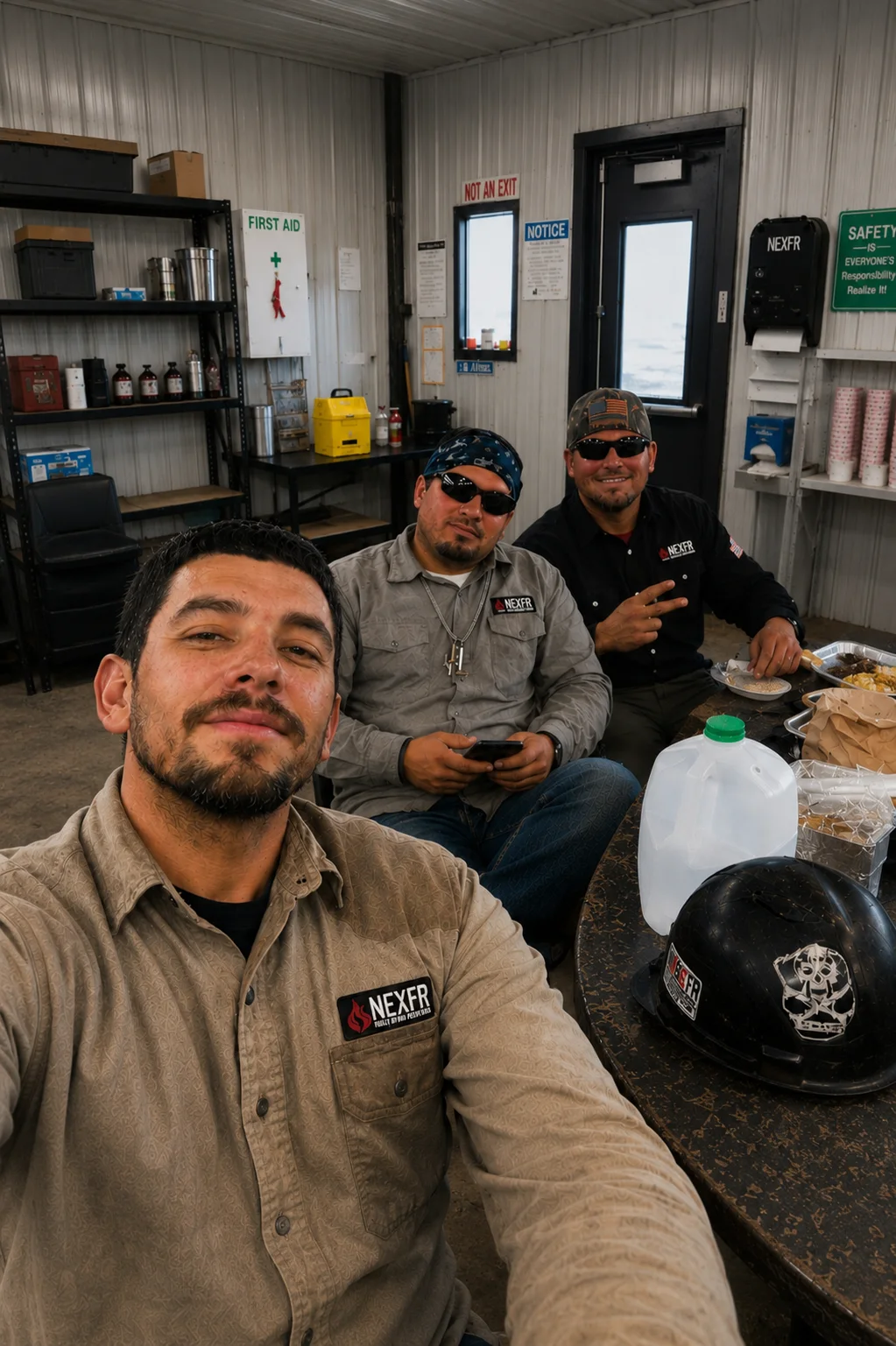
This is particularly important for workers who spend twelve hours or more in their gear. A refinery operator may move between a control room and process units. A pipeline worker may spend the entire day outdoors. A welder may work around intense heat, while a supervisor or foreman may walk miles across a large industrial site during a single shift.
Comfort can influence how consistently workers wear their PPE correctly. Breathability, weight, mobility, seam construction, fabric feel, pocket placement, closures, and overall fit can make a significant difference during long shifts.
At Næxon, the goal is to bring a modern approach to industrial workwear by combining protection, durability, functional design, and clean styling for the people who keep essential industries moving.
The Næxon identity is rooted in respect for welders, pipefitters, ironworkers, operators, electricians, millwrights, boilermakers, scaffold builders, riggers, crane operators, supervisors, foremen, project managers, and the countless other professionals whose skills keep refineries, pipelines, power plants, and industrial facilities operating.
Choosing FR clothing should begin with the actual hazards of the job. Workers should verify employer requirements and determine which standards, ratings, and garment configurations are necessary. A worker should never select protective clothing based only on appearance, price, or a generic FR claim.
The garment should also be inspected before use. Tears, holes, severe abrasion, damaged closures, contamination, or other deterioration may affect performance. If there is any question about whether a garment remains suitable for service, workers should follow their employer’s program and the manufacturer’s instructions.
Proper laundering is equally important. FR garments should be washed according to their specific care instructions. Certain substances, contaminants, bleaches, fabric softeners, or other products may be prohibited depending on the garment and manufacturer. Workers should not assume that every FR garment has identical care requirements.
Layering also requires attention. Wearing an FR outer garment over an inappropriate melting underlayer can create additional hazards in some exposure scenarios. Workers should follow their employer’s PPE program and applicable guidance when choosing base layers, outerwear, jackets, hoodies, and other garments.
In hot environments, workers may be tempted to alter their clothing for comfort. Rolling sleeves, leaving garments excessively open, or wearing protective apparel incorrectly may reduce coverage. The correct approach is to choose suitable, comfortable PPE and wear it according to workplace requirements.
Oilfield and refinery work is already physically demanding. Workers should not have to choose between protection and mobility. Modern FR workwear can provide a better balance through thoughtful fabric selection, durable construction, practical features, and a fit designed around real movement.
Durability is especially important because industrial environments are unforgiving. Clothing may encounter pipe racks, steel structures, tools, equipment, grease, dirt, repeated laundering, and constant physical movement. Poorly constructed workwear can wear prematurely, making quality stitching and materials important considerations.
Premium workwear is not simply about adding a higher price tag. A genuinely premium garment should earn that description through materials, construction, fit, functionality, durability, and attention to detail.
For Næxon, that means creating workwear for professionals who expect their gear to work as hard as they do. A shirt should look professional while allowing freedom of movement. Closures should be functional. Stitching should be dependable. The overall design should reflect the industrial community rather than imitate it.
The oil and gas industry is built on skilled people. Technology, automation, and equipment continue to evolve, but it still takes experienced professionals to fabricate piping, operate plants, maintain equipment, perform inspections, execute turnarounds, erect structures, repair machinery, and solve problems under demanding conditions.
Those workers deserve equipment designed with their realities in mind.
FR clothing is only one component of a comprehensive safety system. Engineering controls, administrative controls, permits, procedures, training, hazard assessments, gas monitoring, lockout/tagout, fall protection, respiratory protection, eye protection, hearing protection, gloves, hard hats, and other measures may all be necessary depending on the work.
No shirt can replace proper training. No pair of pants can replace a hazard assessment. No piece of PPE makes a worker invincible. Safety depends on using the right controls together and respecting the risks associated with the work.
But when flame-resistant clothing is required, quality matters. Proper certification matters. Correct fit matters. Care matters. How the garment is worn matters.
For the worker leaving home before sunrise for a twelve-hour shift, these details are personal. Safety is about more than statistics. It’s about finishing the job and returning home to the people who matter.
That is why flame-resistant workwear deserves serious consideration. The best FR clothing should provide appropriate protection for the identified hazard while supporting the comfort, movement, durability, and confidence professionals need throughout demanding shifts.
Næxon exists to serve that workforce with a straightforward philosophy: respect the people doing the work, understand the environments they face, and create products worthy of being worn on the job.
Built to work. Engineered to perform.