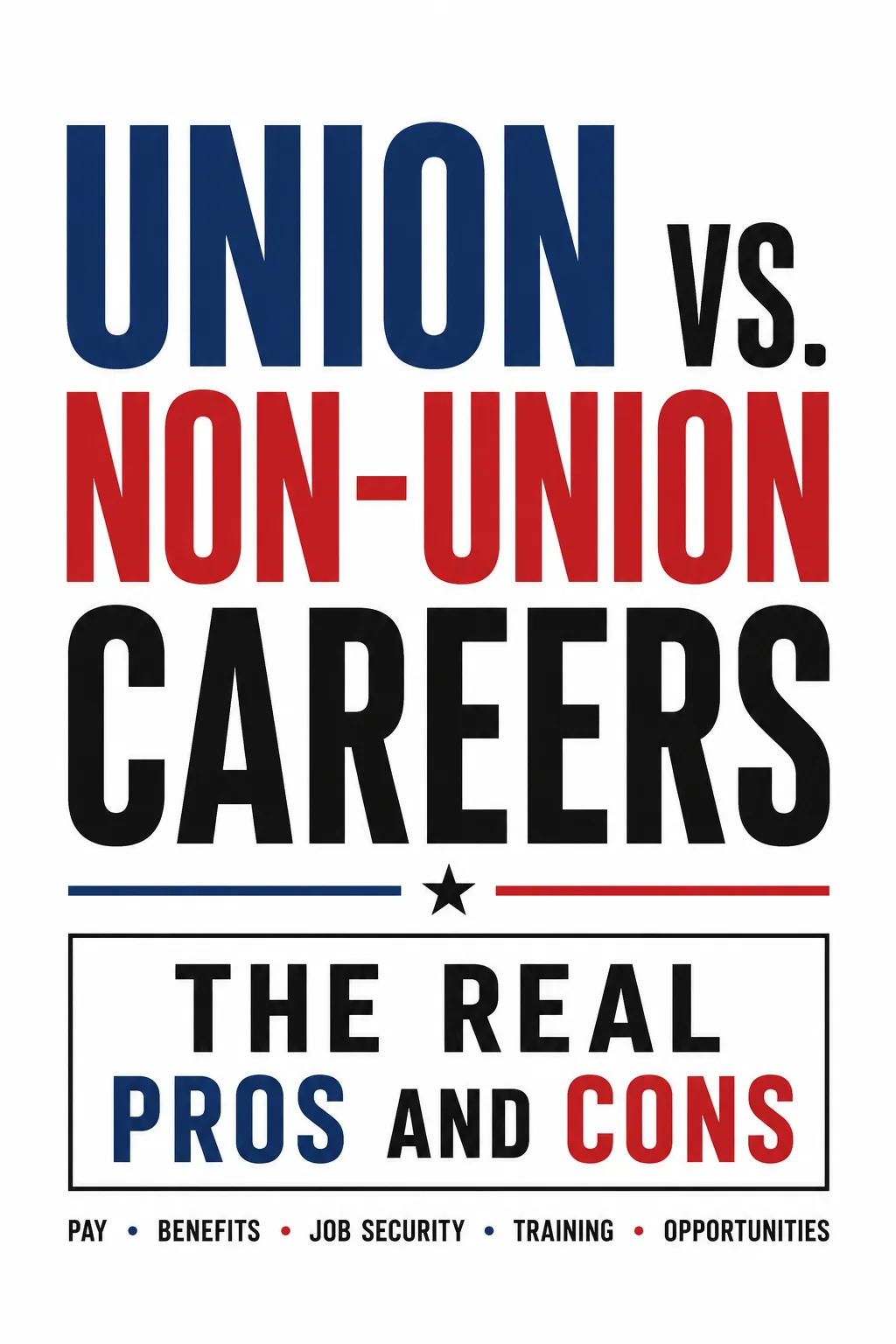
Few topics create more debate in the skilled trades than the question of whether it’s better to work union or non-union. Ask ten experienced tradesmen, and you’ll likely get ten different answers. Some swear they’ll never leave their union hall, while others have built long, successful careers working for merit shops.
The truth is that neither path is automatically better. Both union and non-union careers have strengths, challenges, and opportunities. The best choice depends on your goals, location, preferred work environment, and the type of career you want to build.
Whether you’re just entering the trades or considering a career change, understanding the differences can help you make an informed decision.
What Is a Union?
A labor union is an organization that represents workers by negotiating wages, benefits, working conditions, and other employment terms with employers.
Many industrial trades have long-established unions, including:
- Pipefitters
- Electricians
- Ironworkers
- Boilermakers
- Millwrights
- Operating Engineers
- Laborers
- Carpenters
- Sheet Metal Workers
- Teamsters
Most unions operate apprenticeship programs, training centers, and hiring halls that connect members with contractors.
What Is a Non-Union Career?
Non-union workers are employed directly by contractors or companies without collective bargaining through a union.
Employment terms—including pay, benefits, schedules, and advancement—are negotiated between the employer and employee or set by company policy.
Many large industrial contractors, manufacturing companies, utilities, and construction firms successfully operate with non-union workforces.
Pay Comparison
One of the biggest reasons workers join unions is competitive wages.
Union careers often offer:
- Higher hourly wages in many regions
- Overtime protections
- Shift differentials
- Negotiated raises
- Standardized pay scales
Non-union pay can vary significantly depending on the employer. Some companies pay below local union wages, while others match or even exceed them to attract experienced workers.
The key takeaway is that pay depends on the company, region, and demand for skilled labor—not simply whether the job is union or non-union.
Benefits
Union benefit packages are often negotiated through collective bargaining and may include:
- Health insurance
- Pension plans
- Annuity contributions
- Training programs
- Vacation funds
- Supplemental unemployment benefits
Non-union employers may also offer excellent benefits, such as:
- 401(k) retirement plans
- Health insurance
- Profit sharing
- Bonuses
- Tuition reimbursement
- Performance incentives
Comparing the total compensation package—not just hourly pay—is essential.
Training Opportunities
Many union apprenticeship programs are recognized for their structured classroom instruction and hands-on experience.
Workers receive training in areas such as:
- Safety
- Blueprint reading
- Welding
- Rigging
- Equipment operation
- Specialized certifications
Non-union companies also invest heavily in training, particularly large industrial contractors that need highly skilled workers. Some employers even pay for outside certifications and continuing education.
Job Security
Neither career path guarantees year-round employment.
Union workers may experience layoffs when projects end but can often seek new opportunities through their hiring hall.
Non-union workers may remain with the same employer for years or move between companies as projects change.
In both systems, dependable, skilled workers are often the first to be hired and the last to be laid off.
Career Advancement
Union careers typically have clearly defined progression through apprenticeship and journeyman status.
Non-union companies may offer faster promotions into roles such as:
- Lead
- Foreman
- Superintendent
- Project manager
- Operations manager
Advancement depends on skill, leadership, reliability, and the employer’s organizational structure.
Travel Opportunities
Industrial construction frequently requires travel regardless of union status.
Workers in both systems may spend time on:
- Refinery turnarounds
- Pipeline projects
- Power plant outages
- LNG facilities
- Manufacturing expansions
Some enjoy traveling for higher-paying projects, while others prefer staying close to home.
Flexibility
Non-union careers sometimes provide greater flexibility when negotiating:
- Pay
- Work schedules
- Promotions
- Job responsibilities
Union employment generally follows negotiated agreements that apply consistently across represented workers.
Each approach has advantages depending on what you value most.
Workplace Culture
Culture varies far more by contractor than by union status.
Excellent companies exist on both sides.
Look for employers that prioritize:
- Safety
- Respect
- Professionalism
- Quality workmanship
- Training
- Career development
A positive work environment often has a greater impact on job satisfaction than whether the company is unionized.
Pros of Union Careers
- Strong apprenticeship programs
- Competitive wages in many markets
- Comprehensive benefit packages
- Pension opportunities
- Standardized pay scales
- Collective bargaining
- Extensive safety training
- Access to large industrial projects
Cons of Union Careers
- Membership requirements
- Dues and fees
- Employment may depend on project availability
- Hiring hall procedures vary by location
- Work opportunities can fluctuate with local construction demand
Pros of Non-Union Careers
- Greater flexibility
- Direct negotiation with employers
- Potential for rapid advancement
- Performance-based bonuses
- Diverse employment opportunities
- Some employers offer highly competitive compensation
Cons of Non-Union Careers
- Benefits and pay vary widely by employer
- Fewer standardized advancement paths
- Training opportunities may differ between companies
- Retirement benefits depend on employer programs
Which Path Is Right for You?
There is no universal answer.
A union career may be ideal if you value structured training, negotiated benefits, and access to large-scale industrial projects.
A non-union career may be a better fit if you prefer flexibility, direct relationships with employers, or opportunities to advance quickly within a company.
The most successful tradespeople build strong reputations through skill, reliability, professionalism, and a commitment to safety—qualities that matter in any workplace.
Final Thoughts
The union versus non-union debate has existed for generations, and it will likely continue for many more. Rather than viewing one path as universally better, focus on finding an employer or organization that aligns with your career goals, provides opportunities to grow, and values quality craftsmanship.
Whether you’re working a refinery turnaround, building a new pipeline, maintaining a power plant, or fabricating steel in a shop, your reputation is built by your work ethic, your attitude, and your willingness to keep learning.
At Næxon, we’re proud to support the men and women who keep America’s industries running—union and non-union alike. Every skilled tradesperson deserves dependable workwear built for demanding environments, because safety, quality, and pride in craftsmanship have no affiliation.