A refinery turnaround is nothing like an ordinary workweek. Thousands of maintenance, inspection, repair, and construction activities can be compressed into a short window while pipefitters, welders, boilermakers, millwrights, electricians, scaffold builders, riggers, operators, inspectors, and supervisors work throughout the same facility.
The days are long. The environment changes constantly. Workers climb, crawl, kneel, weld, grind, rig, lift, walk, and sometimes spend twelve hours or more inside the unit.
Under those conditions, workwear stops being something you simply put on before work.
It becomes part of your equipment.
Twelve-Hour Shifts Change What Comfortable Means
A work shirt can feel perfectly comfortable when you put it on before sunrise. The real test comes ten hours later after you’ve climbed ladders, crawled underneath piping, carried tools, worked from scaffolding, and walked miles around a process unit.
Poor-fitting workwear becomes increasingly noticeable as the shift progresses.
A shirt that’s too tight can interfere with reaching, bending, climbing, and overhead work. Clothing that’s excessively loose can move around constantly and potentially interfere with tools, equipment, or other PPE.
That’s why proper fit isn’t simply about appearance. It’s about being able to move naturally while performing physical work for an entire shift.
Næxon covers this subject in greater detail in our guide to proper fit in industrial workwear and how it affects jobsite productivity.
Refinery Work Is Hard on Clothing
Industrial workers are incredibly hard on their clothes.
During a turnaround, a worker might spend one shift squeezing between piping, kneeling on steel grating, climbing scaffold, fitting pipe, welding, grinding, carrying rigging, or working around sharp steel.
Then they come back the next day and do it again.
Seams experience repeated stress. Cuffs rub against steel. Pockets carry tools and hardware. Sleeves encounter sparks and abrasion. Closures are opened and closed repeatedly.
Ordinary clothing isn’t necessarily designed around that environment.
Purpose-built industrial workwear places much greater emphasis on characteristics such as durability, mobility, construction quality, useful pockets, reinforced stitching, and compatibility with required PPE.
For a deeper explanation of how industrial clothing differs from ordinary work clothing, read the Næxon Ultimate Guide to Industrial Workwear.
FR Clothing Is Not Just Another Work Shirt
Flame-resistant clothing is frequently associated with refinery and petrochemical work because certain tasks and environments can involve thermal hazards.
But there is an important distinction every worker should understand:
Flame resistant does not mean fireproof.
FR garments are designed for particular protective purposes, but the appropriate clothing and PPE depend on the hazards, task, employer requirements, facility requirements, and applicable standards.
Workers should never assume that simply wearing something labeled FR makes them protected from every thermal hazard.
Our guide to flame-resistant apparel for welders explains more about FR clothing, garment selection, and what industrial workers should understand about flame-resistant apparel.
The most important rule remains simple: wear the protection required for the actual hazard and follow the site’s PPE requirements.
Dress for the Entire Turnaround Shift
Experienced turnaround workers don’t dress for the first hour of the morning.
They prepare for the entire shift.
A worker may begin before sunrise when temperatures are relatively cool, spend the afternoon working in significantly warmer conditions, encounter wind or rain later in the day, and still have several hours remaining before quitting time.
The work itself changes too.
You might spend part of the day walking around the unit and another part climbing scaffolding or working in a confined area.
That means clothing needs to balance protection, mobility, durability, and comfort according to the actual job requirements.
For a more detailed breakdown, read our guide on what to wear during refinery turnarounds and maintenance outages.
Small Clothing Problems Become Big Problems After Ten Hours
This is something people who haven’t worked long industrial shifts sometimes underestimate.
A slightly uncomfortable collar doesn’t seem important at 6:00 a.m.
A poorly positioned seam doesn’t seem important during orientation.
A shirt that restricts your shoulders doesn’t seem terrible while you’re standing in the parking lot.
After hundreds of repetitions—climbing, reaching, bending, kneeling, carrying, and lifting—small annoyances become much more noticeable.
Good industrial workwear should almost disappear while you’re working.
You shouldn’t constantly be pulling your shirt down, repositioning your sleeves, fighting your cuffs, or adjusting your clothing every time you climb.
The equipment should work with you rather than against you.
Mobility Matters
Industrial construction requires a surprising range of movement.
A pipefitter might climb into a pipe rack and work overhead.
A welder might spend hours positioned underneath a joint.
A boilermaker might enter equipment where working space is extremely limited.
A scaffold builder may climb continuously throughout the shift.
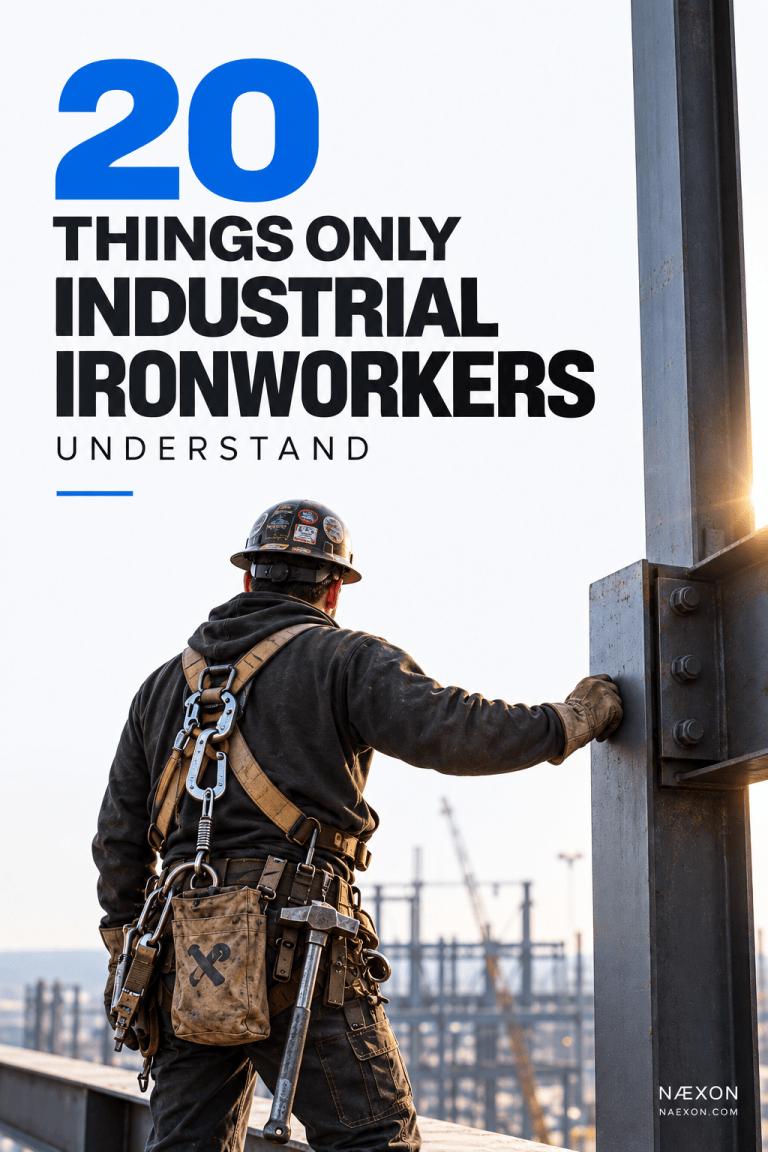
An ironworker may repeatedly reach, bend, climb, and position material.
Workwear needs enough room for those movements without becoming excessively loose.
That balance between mobility and fit is one reason experienced industrial workers often become very particular about the shirts, pants, boots, gloves, and other equipment they wear every day.
Durability Is About More Than Thick Fabric
A common misconception is that heavier automatically means more durable.
It isn’t that simple.
Garment durability also depends on construction.
Important areas include stitching, seams, closures, cuffs, pockets, stress points, and how the garment is assembled.
Two shirts made from apparently similar materials can perform very differently after months of industrial use because one was constructed to withstand repetitive abuse and the other wasn’t.
This is particularly important for workers who travel from shutdown to shutdown.
Replacing inexpensive workwear repeatedly can eventually cost more than purchasing equipment that lasts.
Your Workwear Has to Work With Your PPE
Your clothing doesn’t operate independently.
Depending on the task, you may also be wearing a hard hat, safety glasses, hearing protection, gloves, harness, welding hood, respirator, face shield, protective sleeves, or other required PPE.
Workwear should allow those systems to function as intended.
Sleeves shouldn’t constantly interfere with gloves. Clothing shouldn’t make a harness unnecessarily difficult to wear. Eye protection needs to remain comfortable enough to keep on for the required duration.
Everything needs to function as a system.
That is why selecting industrial workwear should always begin with the actual job and its hazards—not simply appearance.
Experienced Workers Build a System
After enough shutdowns, most industrial workers develop their own clothing system.
They know which shirts survive welding. They know which boots they can wear for twelve hours. They know which gloves they prefer for fitting and which ones they use for welding. They keep extra safety glasses. They understand layering. They carry backup clothing when weather conditions are unpredictable.
Those decisions usually come from experience.
You eventually discover that the cheapest option isn’t always the least expensive and the most expensive option isn’t automatically the best.
The best equipment is the equipment that reliably performs the job you need it to perform.
Related Næxon Gear
For workers building out their refinery, welding, or industrial workwear setup, Næxon offers workwear and equipment designed around the needs of skilled tradespeople.
You can browse Næxon industrial workwear and gear to see the current collection.
When choosing any workwear or PPE, make sure the product is appropriate for the task and meets your employer’s, facility’s, and applicable safety requirements.
Keep Learning Beyond Your Trade
One of the best things about industrial work is that there is always another system to understand.
Pipefitters start learning equipment. Welders learn metallurgy. Millwrights learn piping. Boilermakers learn rigging. Electricians learn process equipment.
Experienced journeymen eventually understand pieces of nearly every trade around them.
That knowledge makes crews better.
The Næxon Resources & Learning Center is being built around that idea: practical information for the people who actually build, repair, maintain, and operate industrial facilities.
Final Takeaway
Good refinery workwear isn’t about looking like you work in the trades.
It’s about being prepared to actually do the work.
During a turnaround, long shifts magnify everything. Poor fit becomes more noticeable. Weak construction fails faster. Uncomfortable equipment becomes distracting. Weather changes. Work locations change. Physical demands accumulate.
Your clothing shouldn’t become another problem you have to solve during the shift.
It should provide the appropriate protection required for the job, allow you to move naturally, withstand the environment, integrate with your other PPE, and remain comfortable enough that you can concentrate on your work.
Because when you’re ten hours into a twelve-hour refinery shift, surrounded by piping, steel, equipment, scaffolding, tools, and hundreds of other workers, the last thing you want to be thinking about is your shirt.