There is something about stainless steel that industrial workers understand differently than everyone else.
To most people, stainless steel is a material.
To a welder, pipefitter or fabricator, it’s something you’ve cut, fitted, welded, cleaned, installed and probably fought with at some point in your career.
You know the weight.
You know the feel.
You know what happens when someone contaminates it with the wrong tool.
You know the unmistakable colors left behind by heat.
And you know that when stainless is properly worked, it can be absolutely beautiful.
That connection is what makes the Næxon 316 Stainless Steel Industrial Bracelet different.
It isn’t jewelry trying to imitate blue-collar culture.
It’s blue-collar culture turned into jewelry.
From welding rod to wrist.
Why Stainless Steel?
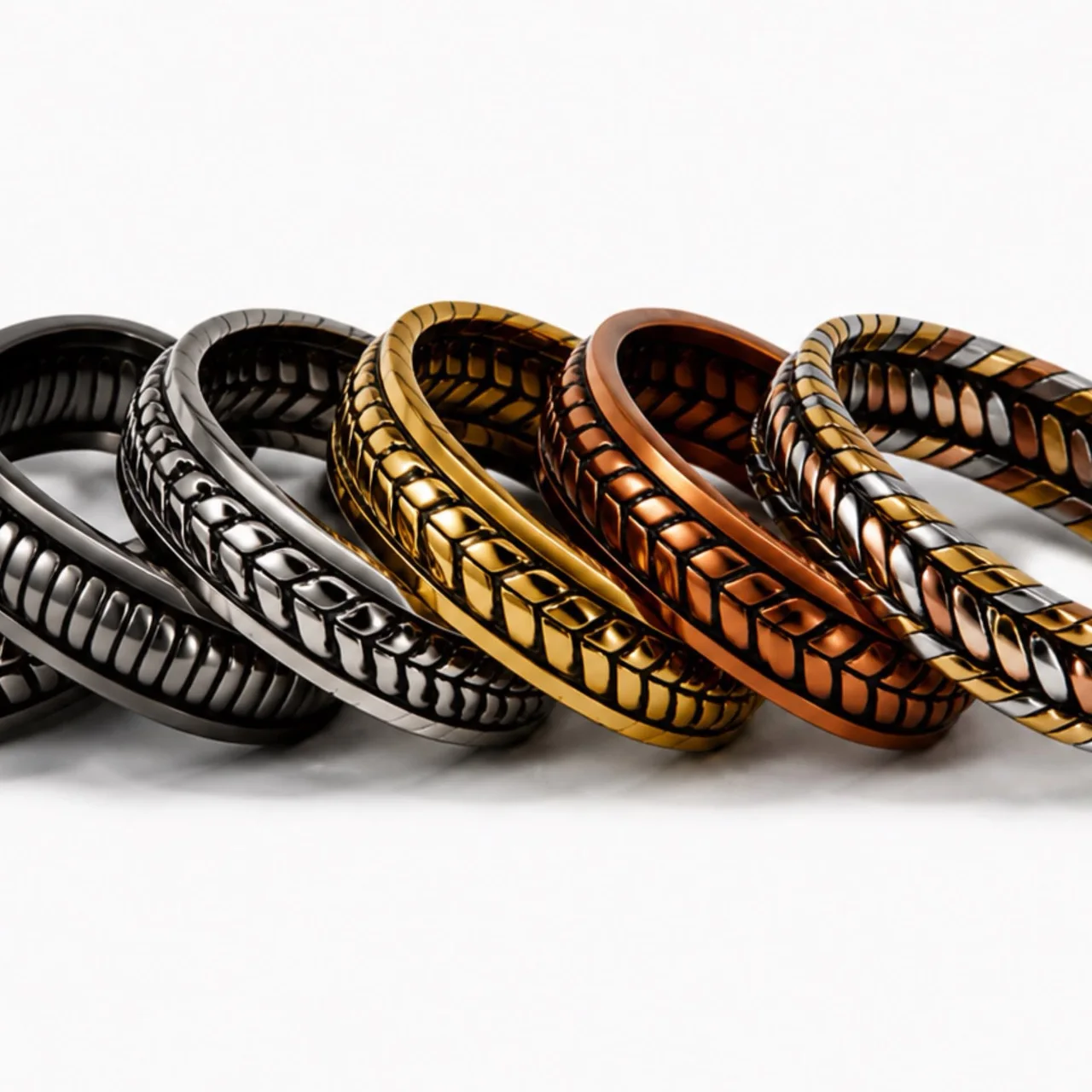
Næxon could have made an ordinary bracelet.
But ordinary wouldn’t make much sense for a brand built around welders, pipefitters, boilermakers, millwrights and industrial workers.
Stainless steel does.
It’s one of the materials that helped build modern industry.
You’ll find stainless throughout refineries, chemical plants, food-processing facilities, power generation, pharmaceutical facilities, marine environments and countless piping systems.
Industrial workers spend entire careers learning how to work with it correctly.
So when Næxon wanted a bracelet representing that world, stainless steel was the natural choice.
Why 316 Stainless?
Not all stainless steel is the same.
Næxon uses 316 stainless steel for its industrial bracelets.
316 is well known for its corrosion resistance, particularly compared with many ordinary steels, and its molybdenum content helps improve resistance in challenging environments.
That’s why 316 has such a strong association with industrial, marine and chemical-service applications.
For tradespeople interested in understanding why different metals behave differently in the field, Næxon’s Learning Center covers the fundamentals in its resources on industrial steel grades.
For the bracelet, though, the reasoning is simpler.
We wanted a material that felt appropriate for the people wearing it.
Industrial material for industrial people.
Where the Welder’s Bracelet Comes From
Bracelets made from welding filler metal have circulated through welding and industrial culture for years.
The idea is beautifully simple.
Take a material associated with the trade and turn it into something personal.
Depending on the style, metal can be twisted, braided, shaped or formed into a bracelet.
What starts as something associated with fabrication becomes something you wear.
That’s why these bracelets have traditionally been called welder’s bracelets.
But Næxon thinks that name only tells half the story.
Because stainless steel doesn’t belong exclusively to welders.
Pipefitters work with it.
Boilermakers work with it.
Fabricators work with it.
Millwrights work around it.
Industrial mechanics encounter it.
Riggers move it.
Inspectors examine it.
Entire crews build systems from it.
That’s why we increasingly think of the Næxon bracelet as an industrial stainless steel bracelet.
The welder’s bracelet may have inspired the culture.
The meaning belongs to the entire industrial workforce.
Jewelry That Actually Looks Right With Work Boots
Traditional jewelry doesn’t appeal to everybody.
Especially when your everyday wardrobe consists of work boots, jeans, pearl snaps, welding caps and industrial workwear.
Something overly polished or delicate can feel completely out of place.
Stainless doesn’t.
It has a naturally industrial appearance.
Put a Næxon bracelet beside a pair of worn work boots and it makes sense.
Wear it with jeans and a clean Næxon pearl snap shirt and it works.
Wear it away from the jobsite with a T-shirt and boots and it still works.
It’s understated enough for everyday wear but distinctive enough that another tradesman may immediately understand what it represents.
The People Who Know, Know
That’s one of the coolest things about trade-inspired gear.
Not everybody needs to understand it.
Someone outside the industry might simply see a stainless steel bracelet.
A welder may see something completely different.
He sees filler metal.
He sees TIG welding.
He remembers learning how to feed wire.
He remembers stainless pipe.
He remembers his first shutdown.
Maybe he remembers sitting in a weld test booth trying to get that root exactly right.
A pipefitter might associate it with stainless systems he’s fitted.
A boilermaker might think about years spent around plants.
The bracelet becomes a subtle connection to the trade.
No giant explanation required.
The people who know, know.
Built for Blue-Collar Style
Blue-collar style wasn’t created in a fashion studio.
It happened naturally.
Workers wore what worked.
Boots became broken in.
Jeans faded.
Welding caps developed personality.
Pearl snaps crossed between Western culture and industrial work.
Hard hats became covered in stickers representing years of jobs, contractors, locals and places.
Eventually those things became part of an identity.
Næxon has explored that crossover throughout its industrial workwear resources, because the clothes and equipment workers use every day eventually become part of the culture surrounding the trades.
The stainless bracelet belongs in that same world.
It’s not trying to make industrial work fashionable.
Industrial work already created its own style.
A Bracelet That Can Represent a Career
Think about how much steel an experienced tradesman touches during a career.
Miles of pipe.
Thousands of fittings.
Flanges.
Valves.
Structural steel.
Supports.
Equipment.
Welds.
Bolts.
Years of construction and maintenance.
Eventually those materials become familiar.
That’s why wearing stainless steel can mean something completely different to someone who’s spent twenty years building with it.
The bracelet isn’t necessarily about jewelry.
It can represent the work.
The trade.
The jobs.
The shutdowns.
The people you’ve worked beside.
The things you’ve built.
The skills it took years to learn.
A simple piece of stainless can carry a lot of history.
From Refinery to Restaurant
One of the most interesting changes in modern workwear is how naturally industrial style now moves outside the jobsite.
We’ve seen the same thing with pearl snap shirts and safety sunglasses.
Workers finish a shift and go directly to dinner.
Boots stay on.
Jeans stay on.
The pearl snap stays on.
Industrial-inspired accessories fit naturally into that transition.
A stainless bracelet doesn’t look like PPE.
It doesn’t scream jobsite.
But its roots are unmistakably industrial.
That’s exactly what makes it work.
You can spend your career around steel without wanting to look like you’re still clocked in everywhere you go.
The Næxon bracelet carries a little piece of that world without becoming a costume.
Not Just for Welders
This deserves repeating.
We love the term welder’s bracelet because it connects the product to the tradition behind it.
But we don’t believe the bracelet belongs only to welders.
If you’re a pipefitter, wear it.
If you’re a boilermaker, wear it.
If you’re a millwright, wear it.
If you’re an ironworker, wear it.
If you’re a fabricator, wear it.
If you’re an electrician working industrial construction, wear it.
If you’re an operator who’s spent twenty years inside refineries, wear it.
If you simply come from a blue-collar family and the industrial trades mean something to you, wear it.
The product may have welding in its DNA.
Its identity is bigger than one trade.
Three Sizes Because One Wrist Doesn’t Fit Everybody
Industrial workers aren’t built from one template.
Neither should their gear be.
Næxon 316 Stainless Steel Bracelets are available in multiple sizes to accommodate different wrists:
Small — 60 mm
Regular — 65 mm
Large — 70 mm
That keeps the design simple while giving workers options for finding a more appropriate fit.
As with any accessory, proper sizing matters. A bracelet shouldn’t be so tight that it’s uncomfortable or so loose that it becomes unnecessarily cumbersome.
A Different Kind of Næxon Product
Most Næxon products have an obvious job.
FR shirts protect workers as part of an appropriate protective clothing system.
Welding caps cover the head.
Safety sunglasses protect the eyes when properly selected for the hazard.
Gloves protect the hands.
Torpedo levels help fitters do their work.
Tungsten holders organize tungsten.
The stainless bracelet is different.
It doesn’t need to perform a job.
It represents one.
And sometimes that’s enough.
A Note About Wearing Jewelry at Work
Although the Næxon bracelet is inspired by industrial work, that doesn’t mean jewelry should be worn while performing every industrial task.
Many jobsites prohibit jewelry, and for good reason.
Bracelets, rings, necklaces and other items can create entanglement, electrical or other hazards around machinery, rotating equipment and certain work operations.
Always follow your employer’s rules and the hazard requirements of the task.
If jewelry isn’t permitted on the job, leave the bracelet in the truck or wear it after the shift.
The bracelet represents the trades.
It doesn’t need to create another hazard while you’re practicing them.
From Welding Rod to Wrist
That’s the story behind the Næxon Stainless Steel Bracelet.
Take one of the materials industrial workers know best.
Take inspiration from the tradition of welder’s bracelets.
Build it from 316 stainless steel.
Give it a clean industrial appearance.
Make it available for different wrist sizes.
And create something that can represent welders without belonging exclusively to welders.
It’s for the pipefitter who has spent half his life around stainless pipe.
The welder who remembers feeding his first stainless root.
The boilermaker who lives from outage to outage.
The millwright rebuilding equipment at two in the morning.
The fabricator who can look at a piece of metal and already see what it’s going to become.
The tradesman whose hands have built things most people will never notice but depend on every day.
To everybody else, it’s a bracelet.
To us, it’s a piece of the trade.
Næxon 316 Stainless Steel Industrial Bracelet.
From welding rod to wrist. Built from the material. Inspired by the trades.