Your forearms are usually right where the work is happening. They reach past sharp pipe, lean against steel, get showered with grinding sparks and squeeze into spaces your shoulders barely fit through. They can end up inches away from hot welds, rough structural steel, pipe racks, equipment and freshly cut material.
Yet when industrial workers think about PPE, arm protection can easily become an afterthought.
Your hands have gloves. Your eyes have safety glasses. Your head has a hard hat. Your torso may already be covered by FR clothing. But everything between your gloves and your shoulders can take an incredible amount of abuse during a normal industrial shift.
That is exactly where a good pair of FR sleeves can earn its place.
Your Forearms Are Constantly in the Line of Fire
Think about what your arms go through during a normal shift. A pipefitter reaches between pipe and structural steel to install a bolt. A welder stretches overhead while sparks fall toward his arms. A millwright reaches inside equipment. An ironworker handles rough structural steel. A boilermaker crawls through equipment where practically every surface seems determined to scrape him.
Even workers who aren’t performing hot work can spend an entire shift rubbing their forearms against steel, grating, pipe, equipment, tools and abrasive surfaces.
One little scrape may not seem like much. After ten or twelve hours of repeatedly reaching around steel, squeezing through pipe racks and handling material, your arms can tell a completely different story.
This is one reason protective sleeves have become such a useful piece of industrial workwear. They’re simple, easy to carry and cover an area of the body that spends a surprising amount of time directly beside the work.
Why Industrial Workers Wear FR Sleeves
FR sleeves provide an additional protective layer over the arms without necessarily requiring the worker to put on another complete garment. Depending on their construction, rating and intended use, protective sleeves can provide additional coverage around hazards encountered during welding, cutting, grinding and other industrial operations.
There is an important distinction, however: FR does not mean fireproof.
Flame-resistant materials are designed to respond differently to flame exposure than ordinary combustible clothing, but no sleeve makes your arm invincible. The PPE still needs to be appropriate for the actual hazard, and workers should always follow the manufacturer’s instructions, their employer’s PPE requirements and the site’s hazard assessment.
That distinction matters because industrial workers sometimes hear “FR” and assume it means protection from practically anything involving heat or flame. It doesn’t.
Good PPE starts with understanding exactly what you’re wearing and exactly what it was designed to do.
Welders Understand the Problem Immediately
Anyone who has welded overhead already understands why arm protection matters.
Gravity doesn’t care how good your hood is.
Sparks and hot particles travel downward, and your arms frequently end up underneath the weld. Even when you’re welding in position, your forearms can remain close to hot material for extended periods.
Then comes grinding. Then cutting. Then fitting, handling material and moving to the next weld.
A welder’s arms can spend an entire shift transitioning from one source of abuse to another.
Traditional welding jackets provide extensive coverage, but there are situations where workers may use protective sleeves as part of their PPE system when they are permitted and appropriate for the task. Being able to add targeted coverage to the arms without automatically adding another complete upper-body layer is one reason sleeves remain popular around industrial hot work.
They’re Definitely Not Just for Welders
Call something a “welding sleeve” and people naturally assume it’s only welding equipment.
Walk through an industrial project and you’ll quickly see why that isn’t necessarily true.
Pipefitters routinely work around sharp pipe edges, tack welds, grinding operations and cramped pipe racks. Boilermakers crawl through vessels, boilers and confined areas where exposed arms can constantly contact steel. Millwrights reach around machinery and equipment. Ironworkers spend their shifts handling structural steel. Maintenance technicians routinely work in locations that seem like they were designed without human elbows and forearms in mind.
Industrial electricians may also work in environments requiring specialized arc-rated PPE, although an important distinction applies here. A generic FR sleeve should never automatically be assumed to provide the arc rating required for an electrical hazard. Electrical PPE needs to meet the applicable hazard assessment and required rating.
The trade doesn’t determine whether arm protection makes sense.
The hazard does.
Abrasion Is the Everyday Enemy
Not every jobsite injury comes from some dramatic event.
Sometimes it’s just steel.
You brush against a pipe support. Your forearm catches a rough edge while reaching for a bolt. You squeeze between structural members. You drag your arm across a piece of equipment because there isn’t enough room to position yourself any other way.
Then you do it again.
And again.
And again.
That repetitive contact is part of industrial work. Protective arm coverage creates another barrier between your skin and the environment. It doesn’t eliminate the need to identify sharp edges, maintain good housekeeping or follow proper work practices, but it can provide valuable additional coverage during repetitive work.
This is where industrial arm protection starts making sense even when nobody is striking an arc.
Too Hot for Another Heavy Layer?
Industrial workers already wear a lot during a normal shift. An FR shirt, hard hat, safety glasses, gloves, harness, hearing protection and sometimes respiratory protection can already make a worker feel loaded down before the actual work begins.
Then somebody tells you to add another heavy layer while you’re working outside in August.
Nobody gets excited about that.
Sleeves can provide targeted arm coverage without automatically covering the entire torso with another garment. When sleeves are appropriate for the task and permitted by the site’s PPE requirements, that can provide a practical balance between protection, mobility and comfort.
Comfort should never override required PPE, but comfort still matters. A worker who can reach naturally, bend his elbows, climb and work without constantly fighting his clothing can concentrate more effectively on the actual job.
That becomes especially noticeable during ten- and twelve-hour shifts.
Sleeves Should Move With You
Bad protective equipment constantly reminds you that you’re wearing it.
Good equipment almost disappears once the work begins.
Industrial sleeves should allow natural movement of the elbows and arms without constantly sliding, bunching, twisting or requiring adjustment. That becomes especially important during overhead work, climbing, welding, fitting, repetitive reaching and working from scaffolds or aerial lifts.
The difference may seem small when you’re standing in the parking lot putting your PPE on.
After twelve hours, small differences aren’t small anymore.
A worker may bend and straighten his elbows hundreds or thousands of times during a shift. He may reach overhead repeatedly, crawl into equipment, climb ladders, pull on wrenches, operate grinders and reposition material.
Anything worn on the arms has to work with those movements instead of constantly fighting them.
Where Næxon FR Sleeves Fit In
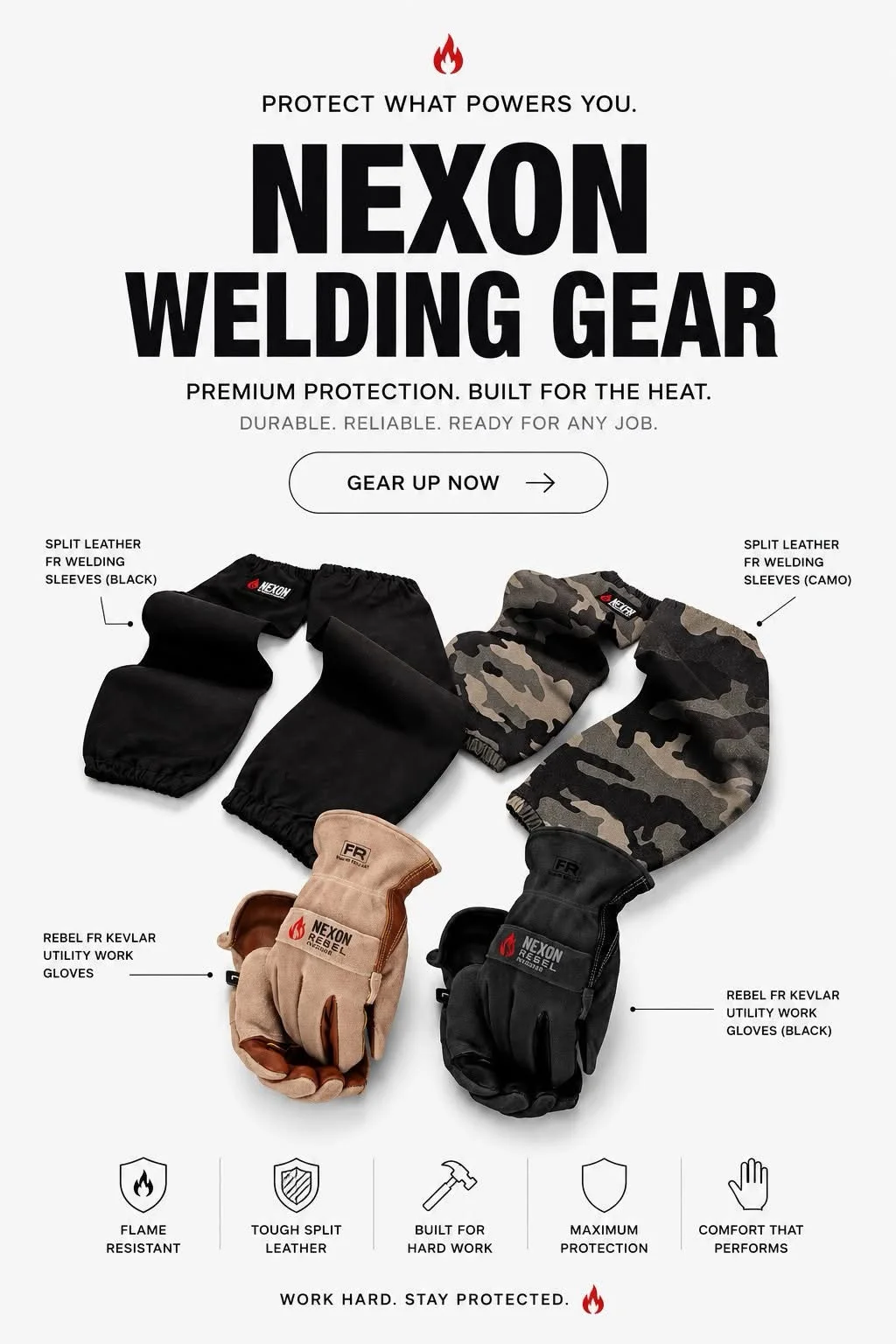
Næxon FR Sleeves are built around a straightforward idea: protect the arms without unnecessarily getting in the worker’s way.
Industrial gear lives a completely different life from ordinary clothing. It gets dragged against steel, exposed to dirt and grime, stuffed into gang boxes, thrown into trucks and worn through long shifts in demanding environments.
That’s why Næxon approaches industrial protective gear with the jobsite first.
FR sleeves aren’t supposed to be complicated. They’re supposed to be there when you need additional arm coverage and stay out of your way while you’re working.
That philosophy runs throughout Næxon industrial workwear and PPE. Whether it’s an FR work shirt, protective sleeves, gloves, eye protection or another piece of jobsite equipment, the gear needs to work in the environment where industrial workers actually use it.
FR Sleeves vs. Næxon Bully Arm Guards
This is where the difference becomes interesting.
An FR sleeve and a heavier-duty arm guard aren’t necessarily trying to solve exactly the same problem.
Næxon FR Sleeves are designed around arm coverage, flexibility and mobility. The Næxon Bully Arm Guards take a different approach, providing a more substantial physical barrier for workers whose forearms repeatedly come into contact with rough industrial environments.
Think about a fitter reaching through pipe all day, a boilermaker crawling around steel, or a worker repeatedly resting his forearm against material while positioning or working on it. In those situations, the punishment isn’t necessarily one dramatic exposure. It’s constant physical contact.
That is where an arm guard can earn its name.
Some workers may prefer the coverage and flexibility of FR sleeves. Others may need the tougher physical protection of an arm guard. Different stages of a job may even call for different solutions.
The correct choice should always come back to the hazards of the task and the PPE requirements of the jobsite.
Your Arms Take the Beating Before You Notice It
Hands get attention because everyone understands hand injuries.
Eyes get attention because nobody wants to lose their vision.
Heads get hard hats because the danger is obvious.
Forearms are different.
They tend to accumulate punishment quietly.
A scrape here. A spark there. A hot piece of material gets a little too close. Your arm rubs against a pipe support. You squeeze between two pieces of equipment. By lunchtime you’ve forgotten half of it.
By the end of the hitch, your arms remember everything.
That’s what makes protective sleeves such an underrated piece of industrial gear.
Know What Your Sleeves Cannot Do
FR sleeves have limitations, and those limitations matter.
They should never automatically be treated as cut-resistant, chemical-resistant, electrically arc-rated or suitable for every welding operation simply because they’re flame resistant. They are not a substitute for welding leathers when welding leathers are required, and they never make it acceptable to place your arm somewhere it shouldn’t be.
The same principle applies to every piece of PPE on an industrial jobsite.
Know what you’re wearing. Know its rating. Know its limitations. Match the equipment to the hazard.
Inspect Your Sleeves Like the Rest of Your PPE
Sleeves live a hard life, so give them a quick inspection before putting them on.
Look for holes, tears, damaged seams, excessive thinning, burns and contamination. Pay particular attention around the wrists and elbows because repeated movement and contact can concentrate wear in those areas.
If the material becomes contaminated with oil, grease, chemicals or another substance that could affect its protective performance, follow the manufacturer’s cleaning instructions and your site’s requirements.
There’s a point where beat-up work gear looks experienced.
There’s also a point where it’s simply worn out.
Know the difference.
One of the Simplest Pieces of Gear in Your Bag
There isn’t anything particularly complicated about a pair of FR sleeves.
That’s part of what makes them useful.
They can live in your gang box, job box or work bag until the task calls for appropriate arm coverage. They don’t require a complicated setup, and they don’t take up much room compared with many other pieces of industrial PPE.
For workers who spend their careers welding, fitting, grinding, climbing, crawling, rigging, repairing and building, that small piece of equipment covers an area of the body that takes considerably more punishment than most people realize.
Your gloves protect your hands. Your glasses protect your eyes. Your hard hat protects your head. Your FR clothing helps protect your body.
Don’t forget about everything between the glove and the shoulder.
Næxon FR Sleeves — built for the arms doing the work.