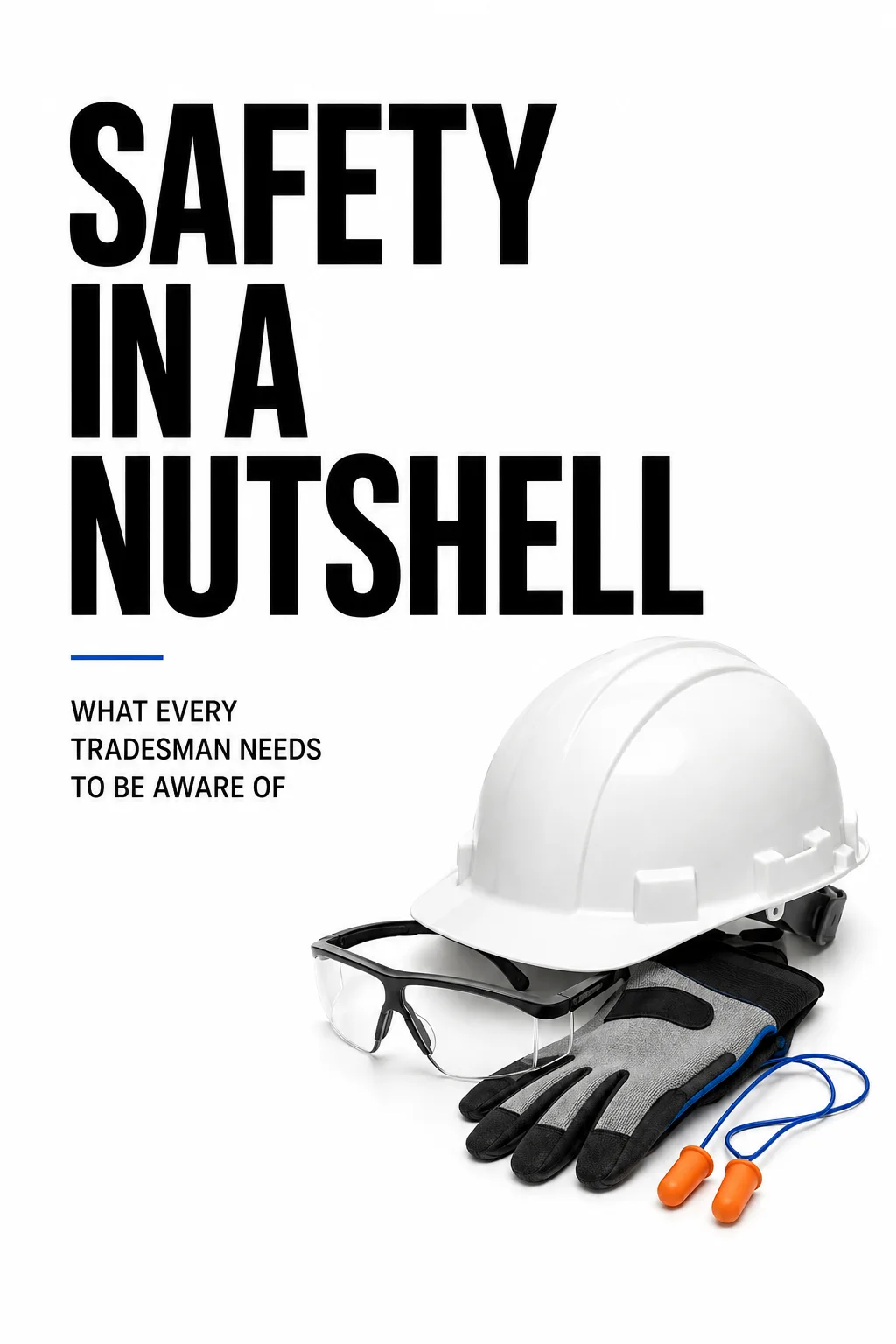
Safety meetings can turn a simple idea into a 40-page PowerPoint.
The field version is much shorter.
Whether you’re a pipefitter, welder, electrician, millwright, ironworker, boilermaker, operator, carpenter, laborer, rigger, scaffold builder, or another industrial hand, most jobsite safety comes down to one habit:
Know what can hurt you before you put yourself where it can.
That doesn’t mean being scared of the work. It means understanding the work well enough to recognize when something isn’t right.
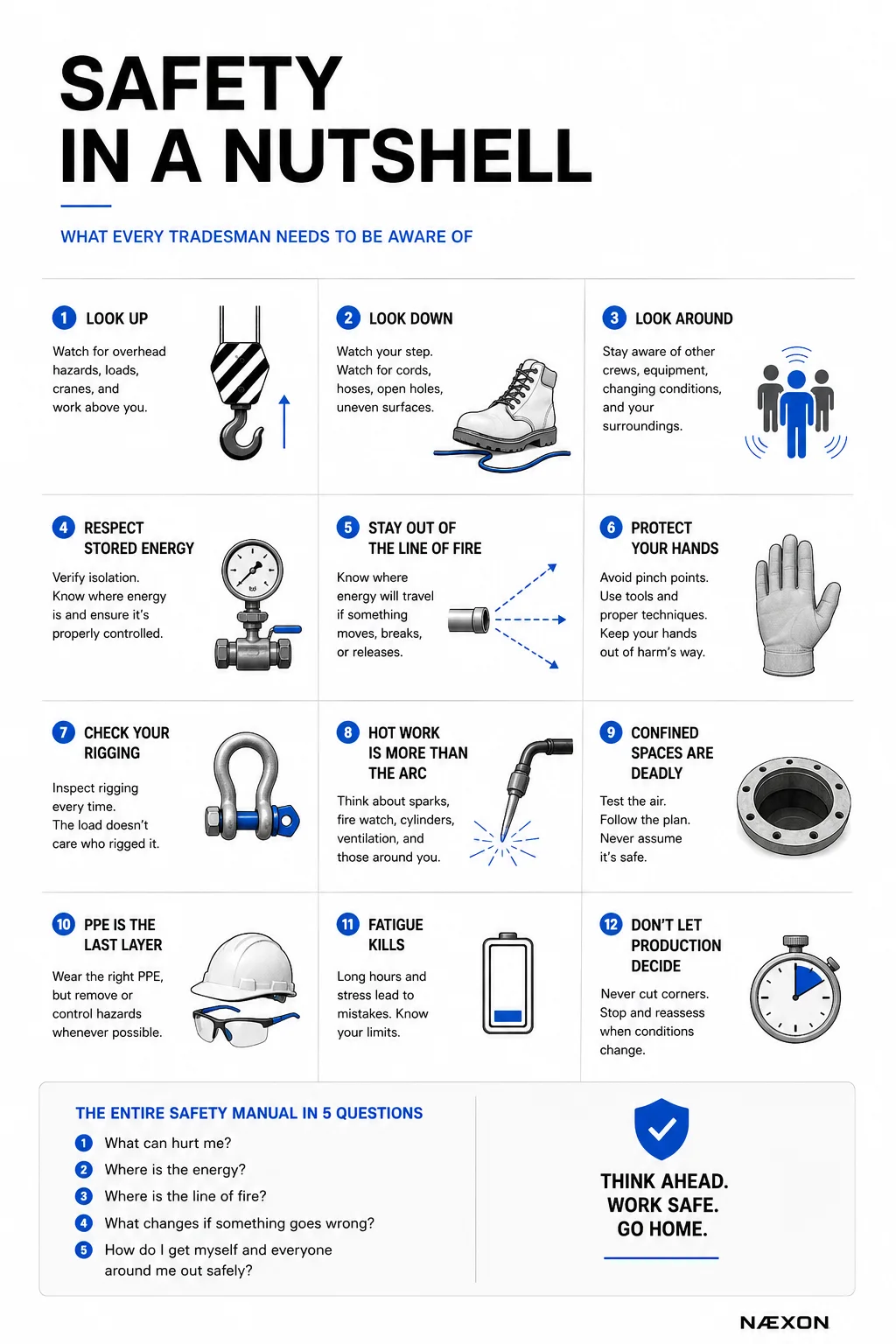
Look Up
Before you start working, look above you.
Is someone working overhead? Is there scaffolding being built? A crane operating nearby? Material sitting on grating? A chain fall hanging above the area? An open floor or platform above you?
A hard hat is important, but it isn’t permission to stand underneath something that can fall.
If you’re rigging or working around cranes, pay even closer attention. Never become comfortable underneath suspended loads simply because you’ve watched the same lift happen twenty times.
If gravity can bring it down, don’t be underneath it.
Look Down
A surprising amount of jobsite trouble is waiting at your boots.
Extension cords. Welding leads. Air hoses. Uneven grating. Open holes. Mud. Ice. Scrap steel. Pipe. Tools. Temporary stairs. Missing grating.
Experienced tradesmen sometimes concentrate so heavily on the task that they stop paying attention to how they’re getting to it.
Watch where you’re stepping—especially when carrying material, walking backward, climbing, or helping guide a load.
Look Around You
Your job isn’t the only job happening.
The electrician beside you may energize something.
The welder above you may start throwing sparks.
The operator behind you may begin moving equipment.
The scaffold crew may start dismantling.
A crane may swing into your area.
Another crew may open a valve, move material, remove a barricade, or change the conditions around your work.
Industrial jobsites constantly change. OSHA specifically emphasizes identifying hazards continuously because changing equipment, operations, work sequences, contractors, and conditions can introduce hazards that weren’t there earlier. (OSHA)
Pay attention to everybody else’s work—not just yours.
Stored Energy Deserves Respect
Electricity is obvious.
Stored energy isn’t always.
Pressure inside a line, compressed gas, hydraulics, pneumatics, steam, springs, elevated equipment, tensioned rigging, rotating machinery, or material sitting under mechanical stress can release tremendous energy with almost no warning.
Before breaking into equipment, removing bolts, opening piping, reaching into machinery, or assuming something is dead:
Know where the energy is and know that it has been properly isolated.
Never let “they said it’s off” replace the site’s required isolation and verification procedure.
Line of Fire
This might be the simplest safety concept worth remembering.
Ask yourself:
If something moves, breaks, falls, releases, kicks back, swings, rolls, or explodes—where is it going?
Then don’t put your body there.
Hands between pipe and steel.
Feet underneath suspended material.
Standing directly behind a come-along.
Being inside the swing radius of equipment.
Standing where pressure could release toward you.
Positioning yourself between moving equipment and a fixed object.
Many dangerous situations become obvious once you start thinking in terms of where the energy will travel.
Protect Your Hands
Tradesmen make their living with their hands, yet hands constantly end up in pinch points.
Before grabbing something, think about what happens if the load shifts.
Don’t put your fingers somewhere you wouldn’t want 5,000 pounds of pipe to suddenly move.
Use handles, tag lines, tools, push sticks, alignment tools, or another method whenever possible instead of sacrificing your fingers for an extra inch of control.
Don’t Trust Rigging Just Because Someone Else Rigged It
Look at it.
Slings, shackles, hooks, chain falls, chokers, lifting points, capacities, angles, sharp edges, center of gravity, and where the load will travel all matter.
And remember something basic:
The load doesn’t care who rigged it.
If something looks wrong, say something before the lift.
Hot Work Means More Than the Arc
Welding, burning, grinding, gouging, and torch work create hazards beyond the person performing the work.
Think about sparks traveling through grating, combustible material nearby, cylinders, hoses, ventilation, fumes, fire watch requirements, and workers below or behind you.
A spark doesn’t know where your work permit ends.
Confined Spaces Change Everything
A vessel, tank, pit, vault, or other confined space can look completely harmless while containing an atmosphere capable of killing someone.
Never assume air is safe because you can’t smell anything.
Follow the site’s confined-space requirements for permits, atmospheric testing, ventilation, attendants, communication, isolation, and rescue planning where applicable.
OSHA notes that gases and vapors can be invisible, odorless, and capable of creating health hazards without an immediately noticeable effect. (OSHA)
PPE Is the Last Layer, Not the Whole Safety Program
Hard hat.
Safety glasses.
Gloves.
FR clothing.
Hearing protection.
Respiratory protection when required.
Harness when required.
Wear the right equipment, but don’t confuse PPE with eliminating the hazard.
NIOSH’s hierarchy of controls puts elimination first, followed by substitution, engineering controls, administrative controls, and finally PPE. Whenever practical, removing or controlling the hazard itself provides stronger protection than simply putting another piece of equipment on the worker. (CDC)
The best hazard is the one you’re no longer exposed to.
Fatigue Changes the Job
Twelve-hour shifts, night shift, shutdown schedules, heat, cold, travel, and weeks without a real day off eventually affect everyone.
That’s when simple mistakes happen.
You forget the tool sitting overhead.
You step backward without looking.
You reach into the pinch point.
You stop checking because you’ve performed the task 200 times.
Experience doesn’t eliminate fatigue.
Sometimes the safest thing an experienced hand can recognize is that he’s no longer operating at 100 percent.
Don’t Let Production Make the Decision
Industrial construction is full of pressure.
We need this welded tonight.
The crane is waiting.
Operations needs the line back.
We’re already behind schedule.
Those things matter.
They still aren’t worth somebody getting crushed, burned, shocked, poisoned, or killed.
If conditions change, stop long enough to understand what changed.
The Most Dangerous Phrase on a Jobsite
“We’ve always done it this way.”
Maybe you have.
That doesn’t automatically make it safe.
Good tradesmen develop shortcuts because experience teaches efficiency. Great tradesmen also understand which shortcuts save time and which shortcuts gamble with consequences.
Knowing the difference is part of mastering a trade.
When Something Doesn’t Look Right
Say something.
You don’t need a safety degree to notice a frayed sling, missing guardrail, unsecured load, leaking hose, damaged cord, incorrect rigging setup, open hole, bad scaffold component, or somebody walking directly into danger.
OSHA’s recommended practices specifically encourage worker involvement in identifying hazards because the people actually performing the work often understand jobsite conditions better than anyone else. (OSHA)
Sometimes five seconds of speaking up prevents something everybody would spend years wishing they could undo.
The Entire Safety Manual in Five Questions
Before starting something unfamiliar—or whenever conditions change—ask yourself:
- What can hurt me?
- Where is the energy?
- Where is the line of fire?
- What changes if something goes wrong?
- How do I get myself and everyone around me out safely?
That’s safety in a nutshell.
Not memorizing slogans.
Not collecting stickers for your hard hat.
Not seeing who can quote the most regulations.
It’s developing enough awareness that you recognize danger before the danger gets a chance to teach the lesson itself.